The 30-Day Cold Plunge Challenge (Beginner Plan)
Written by Matt W on 11th Jun 2026.
In short: The 30-day cold plunge challenge builds cold exposure into a daily habit. Start at 12–15°C for 30–60 seconds in week one, then add time each week towards a comfortable 2–3 minutes at 8–11°C by week four. Daily short dips are fine for most healthy adults; take a rest day if you feel run down. A chiller makes daily plunging far easier.
Key takeaways
- ✓A month of daily dips, building from 30 seconds to 2–3 minutes.
- ✓Start warmer (12–15°C); drop towards 8–10°C only as you adapt.
- ✓Get out before hard shivering — every single day.
- ✓Rest days are allowed; missing one day undoes nothing.
- ✓Remove the faff first: daily plunging dies at the ice-run stage, not in the water.
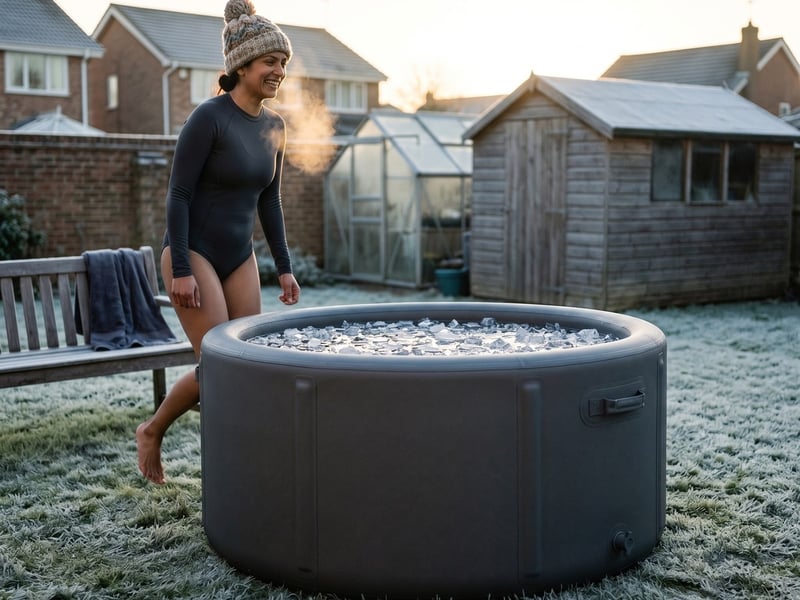
A 30-day challenge is the best way to turn cold plunging from a one-off dare into a habit you keep. The trick is to start gentle and let the month do the work. Here is the week-by-week plan we give customers, plus the bits the challenge videos never mention — rest rules, plateaus, and what day 30 actually feels like.
What is the 30-day cold plunge challenge?
A month of short daily cold immersions that builds from 30-second dips to a comfortable two- to three-minute plunge. The point is not toughness. It is repetition: thirty small exposures teach your nervous system that cold is safe, and by the end the first 30 seconds stop being a battle. People who finish the month almost always keep going, which is why we rate the challenge over any single heroic dip.
Before you start: the ground rules
Read our beginner's guide first if cold water is completely new. Check with your GP if you have a heart condition, high blood pressure, or are pregnant. Never plunge alone in week one. And warm up gently afterwards — walk around, towel off, get dressed. The instant hot shower feels great and can leave you light-headed; save it for half an hour later.
The week-by-week plan
| Week | Temperature | Time per dip | Goal |
|---|---|---|---|
| 1 | 12–15°C | 30–60 seconds | Get in daily. Master the breathing. |
| 2 | 10–13°C | 1–2 minutes | Stay calm and relaxed in the cold. |
| 3 | 9–12°C | 2 minutes | Settle into a steady rhythm. |
| 4 | 8–11°C | 2–3 minutes | Make it a comfortable daily habit. |
Those temperatures are a guide, not a score to beat. If 12°C still feels plenty cold in week four, stay at 12°C — the win is showing up daily, not the number on the dial. Our guide on how cold and how long explains why pushing lower buys you almost nothing.
The daily routine, step by step
- Breathe first. A few slow breaths beside the tub. Calm, not psyched up.
- Check the water. Glance at the thermometer so today matches yesterday.
- Get in steadily. Lower yourself; do not jump. Long exhale as you sink.
- Stay still. The shock passes within 30 seconds. Let it.
- Get out on your terms. Before hard shivering, not after.
- Warm up gently. Move, dry, dress. No instant hot shower.
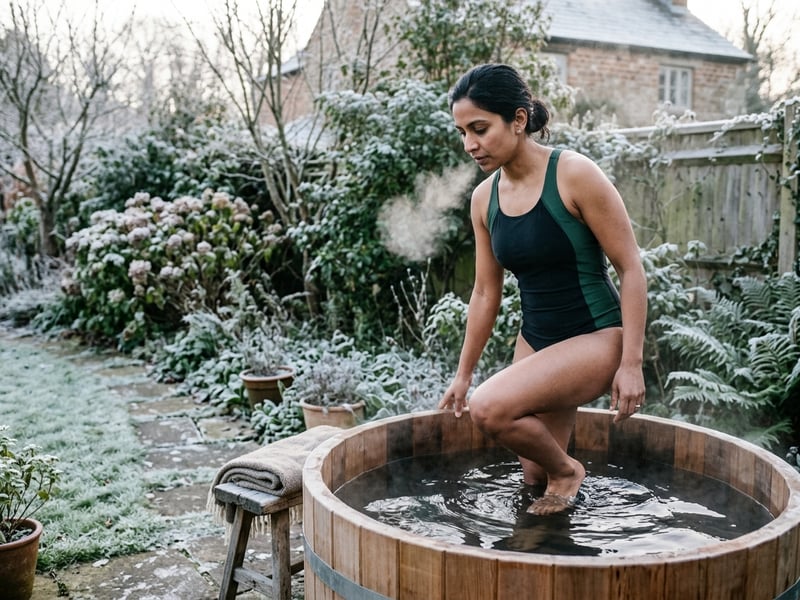
What happens to your body across the month?
The cold-shock response fades fast — most people notice it weakening within the first week. Days one to five are the hardest; the gasp is real and the minute feels long. Around day ten the entry stops being dramatic. By week three most people hit a plateau where progress feels flat — that is normal adaptation, not failure, and it is the point where most quitters quit. Day 30 plungers tell us the same two things: the first 30 seconds became routine, and the after-lift became the reason they kept going. The honest science behind that lift is in our evidence guide.
Rest days, illness and listening to your body
Daily dips are fine for most healthy adults, but this is not about toughing it out. Feeling run down, fighting a cold, or staying chilled long after you get out are all signals to take a day off. Missing one day undoes nothing — getting back in tomorrow is the challenge. Pushing through when your body is asking for a break is how people put themselves off for good.
Matt's Tip: Anchor It To Something You Already Do
Pick the same trigger every day — kettle on, dip, coffee after. The customers who finish the month never rely on motivation; they bolt the plunge onto an existing habit. The ones who "fit it in when they can" are usually done by day nine.
How do you make daily plunging easy?
Remove the faff before day one, because the faff is what kills the challenge. Buying bags of ice every morning gets old by day three; a tub that needs a thermometer check and nothing else gets used. A floating thermometer keeps your dose honest. A chiller takes it further: water at your set temperature around the clock, ready when you are. The chiller vs ice guide shows what each route costs across a month of daily use — for a daily plunger the gap is large. At Cold Plunge Store we see it in the follow-up calls: the chiller customers are still plunging in month three.
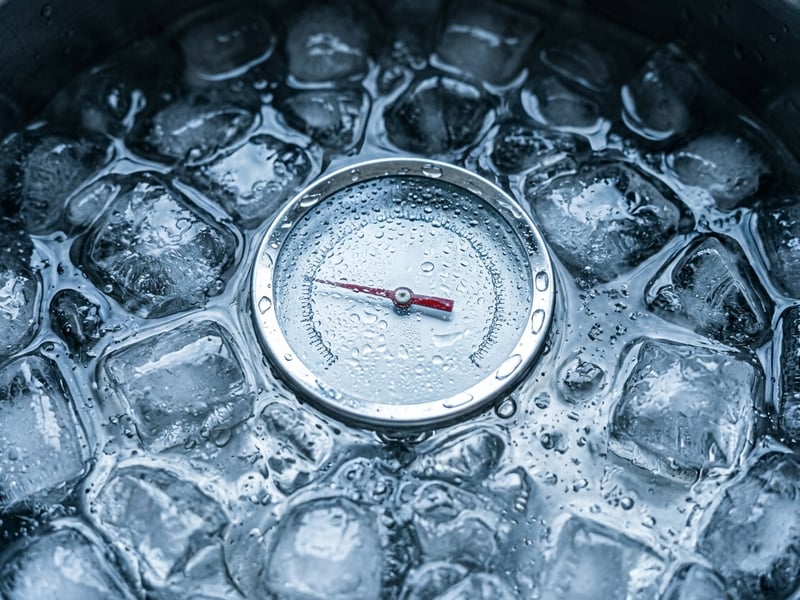
Shop the Floating Thermometer →
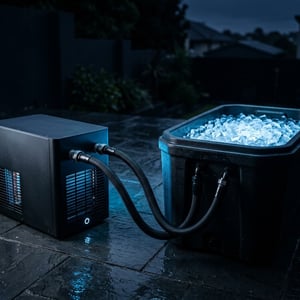
Matt's Pick for Daily Challenges
Best For: Anyone doing the 30 days with a tub they already own — the water is ready every single morning.
Why I Recommend It: Daily plunging lives or dies on friction. The Recovery Pro holds any insulated tub at your set temperature, runs at 44 dB, and its ozone and filtration mean you are not changing water mid-challenge.
Price: £899
Frequently asked questions
What is the 30-day cold plunge challenge?
A month of daily cold immersion building from short dips to 2–3 minutes. It is the simplest way to make cold exposure a habit.
How long should I stay in each day?
Start at 30–60 seconds in week one. Build towards two to three minutes by week four, and always get out before hard shivering.
How cold should the water be for the challenge?
Start around 12–15°C. Drop towards 8–10°C across the month only if you want to — staying at 12°C still counts.
Can I do the challenge every single day?
Yes, daily short dips are fine for most healthy adults. Take a rest day if you feel run down; consistency matters more than a perfect streak.
What if I miss a day?
Nothing is lost — get back in tomorrow. One missed day does not reset your adaptation; quitting over a missed day is the only real failure.
Do I need a chiller for the challenge?
No, but it makes daily plunging far easier. The water is always ready at your set temperature, with no morning ice runs.