Where to Put an Ice Bath: Garden, Garage and Planning (UK)
Written by Matt W on 11th Jun 2026.
In short: Put an ice bath outdoors on a firm, level base near a tap and a power socket, with a little shade. A patio or solid ground is ideal; check decking is rated for 400–600 kg before using it. A garage works too if you have drainage and ventilation. No planning permission is needed for a portable or freestanding tub, and our chillers run from a normal 13A socket.
Key takeaways
- ✓Pick a firm, level base — patio, concrete, or decking you have checked for load.
- ✓Close to a tap (filling) and an outdoor RCD socket (the chiller).
- ✓A filled tub plus a person can weigh 400–600 kg in under a square metre.
- ✓No planning permission for a portable or freestanding ice bath in the UK.
- ✓Garages are a great spot with drainage, airflow and a proper socket.
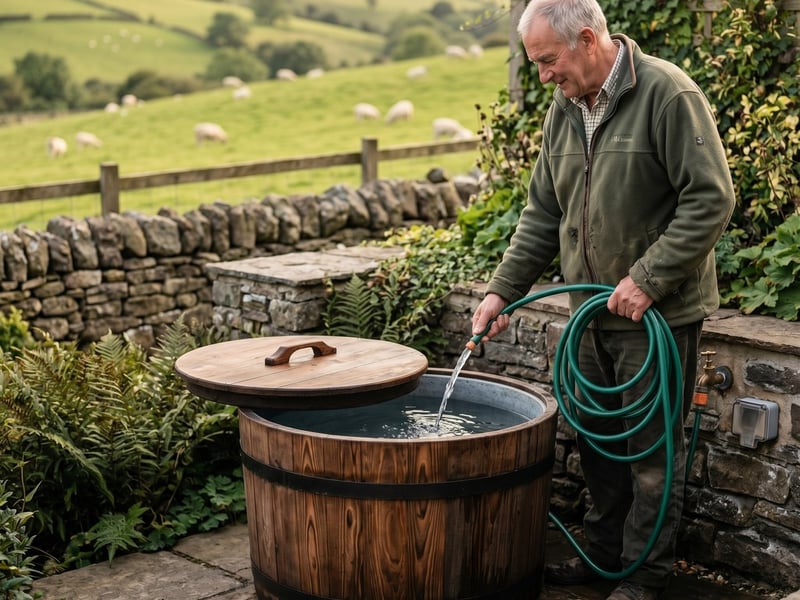
Getting the spot right makes an ice bath far nicer to use — and it is mostly common sense once you know what to check. We talk customers through placement every week, usually in the five minutes before they order. Here is the full checklist, including the one thing almost everyone forgets.
What does a good ice bath spot need?
Five things, in this order: a firm level base, a tap nearby, a socket nearby, some shade, and room to get in and out safely.
- A firm, level base. The tub must sit flat and not rock. Solid ground, a patio or a concrete pad is best.
- Near a tap. You fill with a garden hose; every extra ten metres makes water changes a chore.
- Near power. A chiller needs an outdoor-rated, RCD-protected socket. Long thin extension leads are the wrong answer.
- A little shade. A chiller in full sun works harder and costs more; a north-facing corner runs cheapest.
- Safe entry and exit. Space to step in, and a non-slip surface where wet feet land.
How heavy is a filled ice bath?
Heavier than almost anyone expects: water weighs a kilo a litre, so a 400-litre tub plus a person approaches 600 kg in under a square metre. This is the forgotten check. On solid ground it is a non-issue. On a raised deck or balcony it is the whole issue — standard domestic decking is often rated around 150 kg per square metre, a quarter of what a busy tub can load onto it. We had a customer last spring measure his deck joists mid-call before we would ship; he ended up pouring a small pad instead, which took a weekend and zero risk. If in doubt, put it on the ground, or have a builder confirm the load path.
Garden, patio or garage — which is best?
Garden or patio
The most popular choice, and the easiest. Fresh air, simple drainage onto the ground, and our tubs are built to live outdoors all year. Pick the sheltered corner if you have one — wind chill on the walk out matters more than people think in January.
Garage or outbuilding
An excellent option, especially for winter plungers. Privacy, no weather, and the tub stays cleaner. You need four things: a level floor, a way to empty 400 litres (floor drain or a pump-out kit), ventilation so the chiller can dump heat, and a proper earthed socket. Avoid sealed damp rooms — a chiller in a cupboard cooks itself, and condensation finds everything.
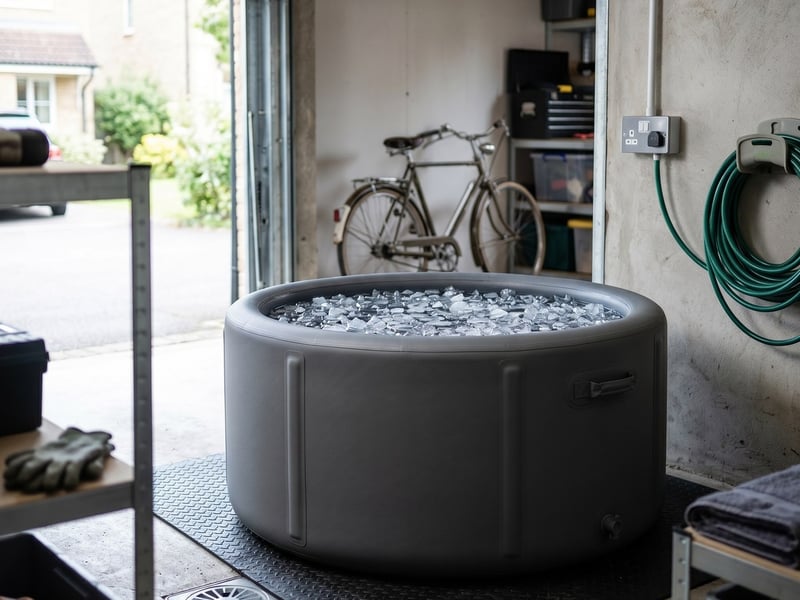
Power and water, done safely
Every chiller we sell runs from a standard 13A plug — no special circuit, no electrician required. Use an outdoor-rated socket on an RCD, keep connections off the ground and out of puddle paths, and route the hose runs where nobody trips. For filling and emptying: a nearby tap, and a gentle fall so drained water runs away from the house. Position the chiller with a hand-width of airflow on every side; it cools the water by heating the air, and it needs somewhere to put that heat. Our running-costs guide shows how much a shaded, ventilated spot saves on the meter.
Do you need planning permission for an ice bath?
No — a portable or freestanding tub is not a building, so planning rules do not apply. That covers every tub we sell. You would only think about permission for a sunken plunge pool built into the ground, or a new outbuilding to house one, and renters should have a quick word with the landlord about drainage rather than the council. Compared with hot tubs (same answer) and garden rooms (different answer), this is the easy case.
Matt's Tip: Walk The Route Barefoot First
Before the tub arrives, walk from your back door to the spot barefoot, then stand still for two minutes. That is the post-plunge experience in February. If the route is gravel, or the spot catches the wind off the side passage, you will know now — a £20 roll of decking tiles and a hook for the towel fix more dropouts than any willpower.
Delivery day: getting it in place
Check the access route before ordering: gates, side passages and tight corners decide more placements than gardens do. Our barrels and hard tubs arrive kerbside on a pallet; from there they wheel or two-person carry through a standard gate. Measure the narrowest pinch point and compare it with the product dimensions on each listing. If the only route is through the house, the inflatable goes through in a box — one reason it suits terraces. Setup help and access advice are on our delivery information page, and the team at Cold Plunge Store will talk any awkward route through before you commit — it is what the phone line is for.
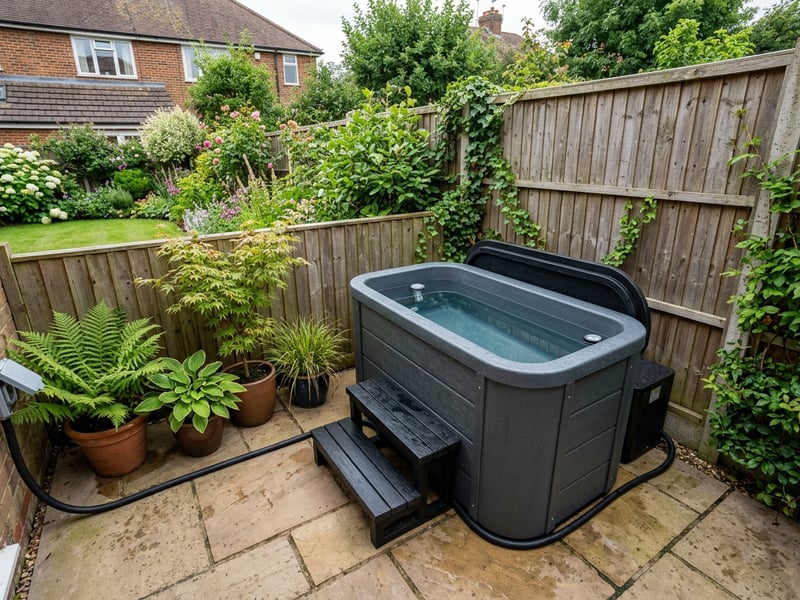

Matt's Pick for Tubs That Live Outdoors
Best For: Any outdoor spot — it keeps leaves and rain out, cold in, and running costs down.
Why I Recommend It: Wherever the tub ends up, the lid is the accessory that makes the spot work: cleaner water under trees, lower bills in the sun, and frost-free mornings in January. At £79 it is the first thing I add to every outdoor install.
Price: £79
Frequently asked questions
Where is the best place to put an ice bath?
Outdoors on a firm, level base near a tap and a socket, with a little shade. A patio, load-checked decking or a garden corner all work well.
Do I need planning permission for an ice bath?
No. A portable or freestanding ice bath is not a building; only fixed sunken pools or new outbuildings raise planning questions.
Can I put an ice bath in a garage?
Yes — many customers do. You need a level floor, a way to empty it, ventilation for the chiller and a properly earthed socket.
Will my decking take the weight?
Check before you fill: a tub plus a person can weigh 400–600 kg. Solid ground or concrete is safest; on decking, confirm the rating or add support.
Does an ice bath need its own electrical circuit?
No — our chillers run from a standard 13A socket. Use an outdoor-rated RCD socket and skip long extension leads.
Can an ice bath stay outside all winter?
Yes — our tubs are built for it, and winter is when they shine. A lid stops leaves and frost, and the cold air does half the chiller's job.