Ice Bath Chiller vs Ice vs DIY Freezer: Which to Buy
Written by Matt W on 11th Jun 2026.
In short: A chiller cools any tub to a steady 3°C for about £15–25 a month, with no ice to buy. Bagged ice is the cheapest way to start, but it costs about £12 a session and the temperature drifts as it melts. A converted chest freezer is cheap to run but fiddly and harder to keep safe. For regular, year-round plunging, a chiller wins.
Key takeaways
- ✓A chiller holds a set temperature on its own; ice melts and drifts.
- ✓Bagged ice is about £12 a session — £200+ a month if you plunge daily in summer.
- ✓A chiller runs from a normal 13A plug for roughly £15–25 a month, measured.
- ✓DIY chest-freezer builds are cheap but need careful wiring and constant upkeep.
- ✓Plunge three or more times a week, or all year? Buy a chiller. Just testing? Start with ice.
Shop the Recovery Pro Chiller →
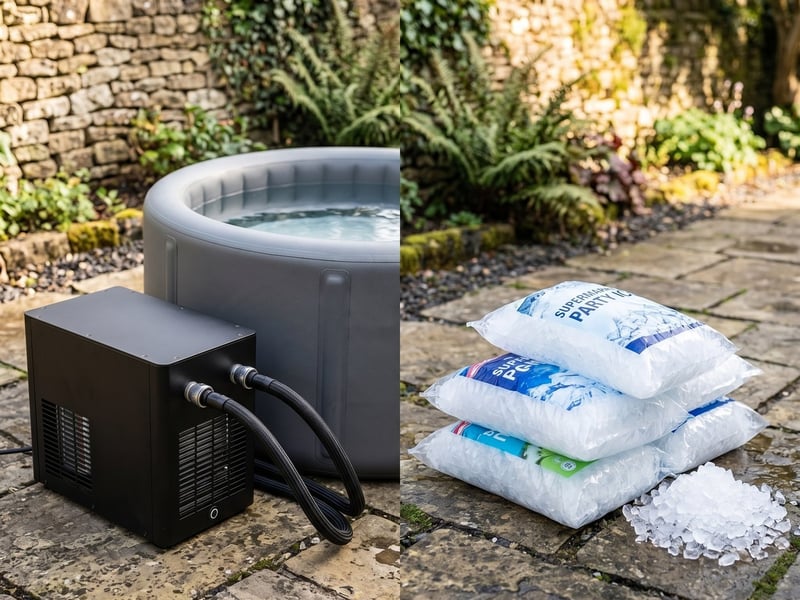
There are three real ways to get cold water at home: tip in bagged ice, run a chiller, or convert a chest freezer. We set up and test all three routes for a living, so this is the honest version — what each costs, how cold it actually gets, and what it is like to live with on a wet Tuesday in February.
Option 1: a tub plus bagged ice
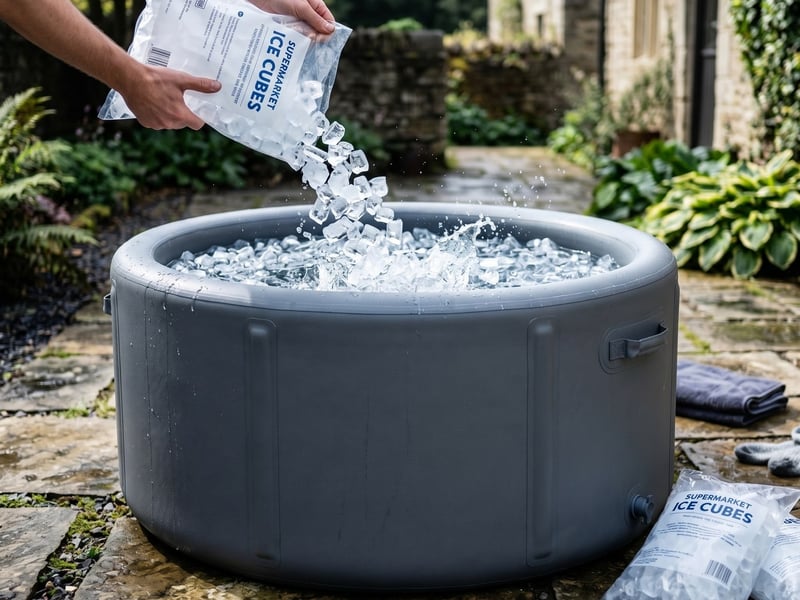
The cheapest way to start, and the dearest way to continue. Buy an insulated tub, fill it with cold water, tip in 10–15 kg of supermarket ice — about £12 a session — and you are plunging today. Two catches. The cost compounds: £12 a time is £100 a month at twice a week and £300+ for a daily summer habit. And the temperature drifts: coldest the moment the ice lands, warming as it melts, so no two sessions match. As a way to test whether cold-water therapy is for you before spending more, though, it is exactly right — it is the route our beginner's guide recommends for month one.
Option 2: an insulated tub, no chiller
Insulation stretches every fill of ice further, and in winter it may be all you need. A well-insulated tub with a lid holds its cold overnight, so one fill can cover several dips in the cooler months — and from October to March UK tap water arrives at 8–12°C anyway. The limit is summer: warm tap water plus fast melt means you are back to hauling bags. Think of this as the sensible winter-only setup, or the staging post before a chiller.
Option 3: a tub plus a chiller
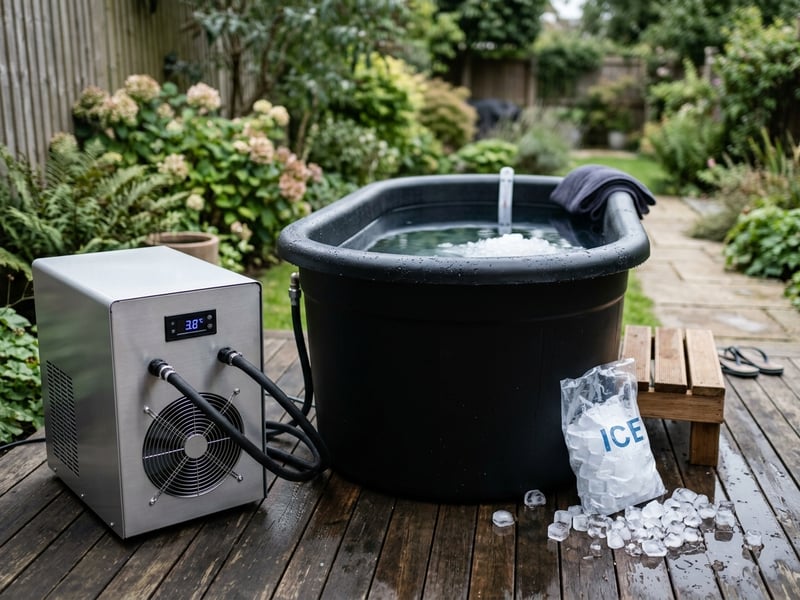
A chiller recirculates the water and holds it wherever you set it — a true 3°C, day after day, no ice. Fill once, set the dial, and the tub is ready every morning. This is where almost everyone who sticks with plunging ends up. The upfront cost is the hurdle; the running cost is not. We metered our 0.9HP Recovery Pro for a month: about 1.2 kWh a day, £15–25 a month all-in at current rates, with built-in ozone and filtration keeping the water clear for weeks between changes. The full meter data is in our running-costs guide.
Option 4: the DIY chest-freezer route
It works, it is cheap to run, and it is the option we talk most people out of. Line a chest freezer, seal it, run it on a timer, and you get very cold water for pennies — which is why the forums love it. The reality: it needs an RCD and properly sealed connections, a food-safe liner, regular scrubbing to stop mould, and constant vigilance because a freezer was never designed to hold a human in water. Done carefully by a handy person it is fine. Done casually it is a hazard sitting in your garage. If you want to fill it and forget it, this is not your route.
The numbers: all four routes compared
| Bagged ice | Insulated tub | Tub + chiller | DIY freezer | |
|---|---|---|---|---|
| Upfront cost | Low | Low–medium | Higher | Low–medium |
| Monthly cost (daily use) | £300+ | Ice top-ups | £15–30 | ~£10–15 |
| Holds a set 3°C | No — drifts | Briefly | Yes, automatically | Yes, with tinkering |
| Works year-round | Seasonal | Mostly winter | All year | All year |
| Effort | Buy and haul ice | Some ice | Fill once, set, forget | Builds, cleaning, checks |
| Safety watch-outs | None | None | None — 13A plug | Wiring, liner, mould |
Run your own numbers in the running-cost calculator — sessions per week and your unit rate are all it needs.
Matt's Tip: Start With Ice, Keep The Receipt Mentality
If you are unsure, do a month on bagged ice and count what you spend. Customers who track it convert themselves: three weeks of £12 sessions is the price realisation that makes the chiller decision for you, in either direction. Either you plunged often enough to justify it, or you learned cheaply that you would not.
So which should you buy?
- Just curious: an insulated tub plus ice. Cheap, low risk, easy to stop.
- Winter-only and budget-minded: an insulated tub with a lid — tap water does the rest from October to March.
- Three or more dips a week, or year-round: a chiller. Bundled with a tub, or added to one you own.
- Handy, patient and on a tight budget: the freezer build — with the electrical work done properly.
For nine out of ten regular plungers we speak to at Cold Plunge Store, the chiller is the answer. The cost of ice and the daily faff are what make people quit; removing both is what makes the habit stick. The setups that do it best are ranked in our best ice baths guide.
Matt's Pick for Skipping The Decision Entirely
Best For: Buyers who already know they will plunge regularly — tub and chiller in one box, nothing to match up.
Why I Recommend It: It bundles the insulated tub with the 0.9HP chiller this comparison keeps pointing at: a measured 3°C hold, 46 dB, about £20 a month. One delivery, no ice aisle, ever.
Price: £1,299
Frequently asked questions
Do I need a chiller for an ice bath?
Only if you plunge often. For three or more sessions a week or year-round use it is well worth it; winter-only or just testing, start with ice.
Is a chiller cheaper than buying ice?
Over time, yes. A chiller costs £15–25 a month measured; daily ice runs £200+ in summer, so payback usually lands within a year.
Can I turn a chest freezer into an ice bath?
You can, and it gets very cold cheaply. But it needs safe electrical work, a liner and regular cleaning — the most hands-on option and the easiest to get wrong.
Will a chiller keep water cold in a UK winter?
Yes — winter is its easiest season. Tap water is already cold, so the unit barely works; summer is when it earns its keep.
How quiet are chillers?
Ours measured 44–46 dB at one metre — about a fridge. We publish the figure for every model so you can plan where it sits.
How much ice does one session take?
About 10–15 kg to reach the low single digits. That is three or four supermarket bags, roughly £12 a session.