Do sauna blankets work? What the evidence says
Written by Matt W on 16th Nov 2026.
Sauna blankets work as heat sources: they make you hot and sweaty, and many people find them relaxing. Evidence for lasting health benefits is almost absent. One 2026 abstract studied 8 adults for 60 minutes, without measuring health outcomes. Our blanket has a 25 to 80°C setting. That upper limit is not a recommended target, and session weight loss is water.
Key takeaways
- Blanket-specific evidence consists of one 2026 conference abstract involving 8 adults.
- Cabin research cannot establish health benefits for a sauna blanket.
- Start with 15 to 20 minutes at 40 to 50°C.
- Weight lost during a session is water.
- A 45-minute session costs about 12p to 18p at an assumed 27p per kWh.
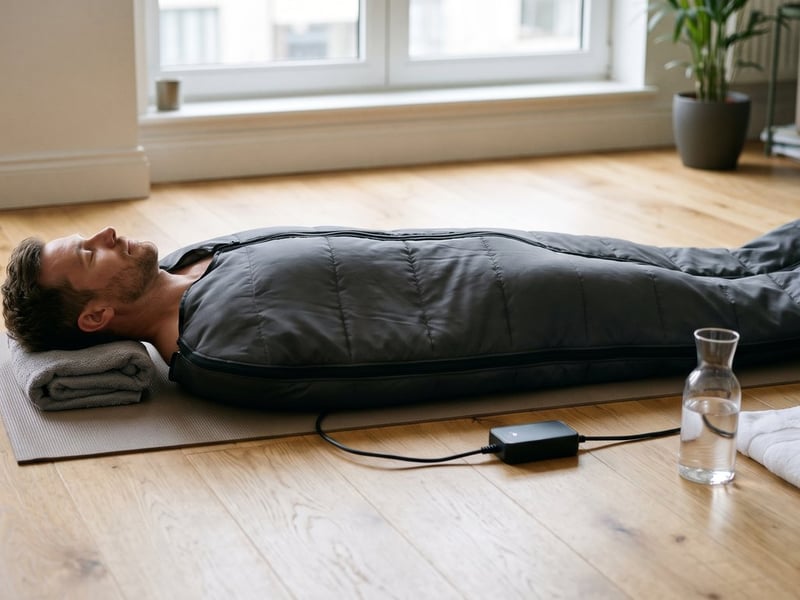
Browse sauna blankets and portable saunas
Matt's note
I see a sauna blanket as a practical purchase for heat and relaxation at home. My advice is to judge it on those terms. A folding design makes sense where space matters. I would leave promises about long-term health out of the buying decision.
Do sauna blankets work?
Sauna blankets make you hot and sweaty, but evidence for health benefits is almost absent. Our model uses fine carbon fibre wires for far infrared heat, spread evenly across the blanket. Its stated wavelength is 4 to 15 microns.
The 2026 blanket conference abstract involved 8 young adults at about 75°C for 60 minutes. Core temperature rose from 36.8 to 38.2°C. Sweat loss was about 1.3 litres, compared with 0.3 litres with the blanket off.
That sweat difference was not statistically significant. The study measured short-term responses, without health outcomes. Its laboratory session is not a recommendation for home use, and our blanket has no trial of its own.
What does the research say about infrared heat?
Infrared cabin research is limited, and its findings do not establish benefits for blankets. Beever's 2009 review covered 9 infrared sauna studies. It found limited but moderate evidence for lower blood pressure, alongside weak, inconsistent weight results.
The review found fair evidence that infrared saunas do not lower cholesterol. Studies were small, came from one research group, and lacked a blinded placebo. Typical sessions lasted about 15 minutes daily for 2 to 4 weeks.
The 2015 Finnish cohort study followed 2,315 men aged 42 to 60 for a median 20.7 years. Traditional sauna use 4 to 7 times weekly was associated with lower mortality than weekly use. This observational link cannot prove cause or establish blanket benefits.
The 2016 Waon trial involved 149 heart failure patients across 19 centres. Treatment used 60°C heat for 15 minutes, then 30 minutes resting under a blanket, daily for 10 days. Symptoms and walking distance improved, but the main blood marker did not reach significance. This was supervised hospital treatment.
In Mero's 2015 recovery study, 10 men used infrared heat at 35 to 50°C for 30 minutes. Strength recovery showed no difference; after endurance training, jump height was slightly better, 0.34 versus 0.32 metres. Our ice bath evidence review examines the evidence for cold-water benefits separately.
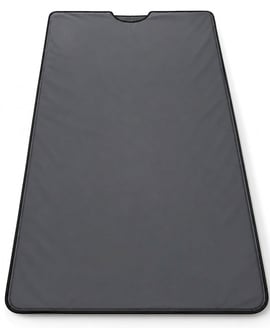
Matt's Pick: Infrared Sauna Blanket
Best for: Reclined indoor heat sessions where folding storage matters.
Why we rate it: It has adjustable heat, a timer and built-in protection against overheating. It runs silently, without a fan.
£165
Do sauna blankets help you lose weight?
Weight lost during a sauna blanket session is water. It returns when you replace that fluid, so a lower post-session reading is not evidence of fat loss. There is no reliable calorie figure to quote.
In Podstawski's 2019 study, 45 overweight men lost 0.65 kg during 4 sessions of 10 minutes. This was a 90 to 91°C dry sauna, and the loss was mainly fluid. It was not a blanket study.
Sweating is also not evidence that persistent pollutants are leaving your body meaningfully. Researchers writing in Environment International argue sweat is not a meaningful clearance route. Buy for heat and relaxation, without counting sweat as a health outcome.
Sauna blanket or infrared sauna: what is the difference?
A blanket wraps around your body, while a cabin has space for you to sit inside. Our blanket measures 180 x 180 cm open and covers one adult, with the head outside. It folds away after use.
Infrared cabins typically run at about 60°C, compared with about 85°C for traditional saunas. These are research temperatures, not specifications for either cabin listed below. The blanket's internal air can read cooler than its setting because heat targets the body.
Our portable tent has 3 carbon panels, a heated foot pad and 1300W total power. It sets up in about five minutes, folds flat and has a 2-year warranty. Compare fixed options in our sauna collection.
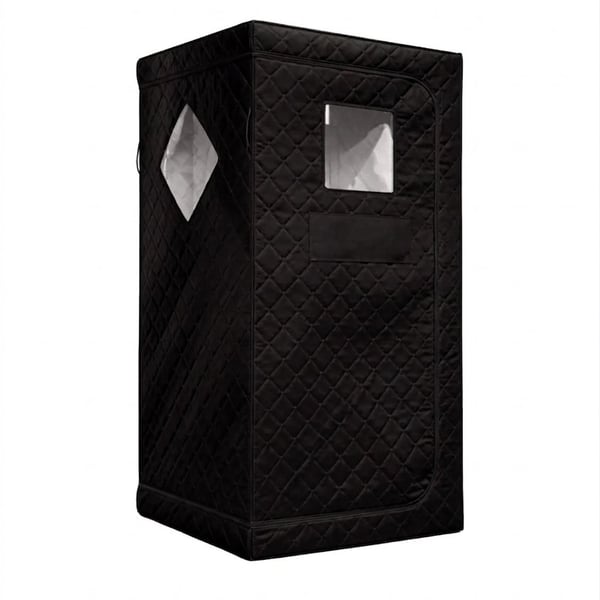
Sauna blanket vs other ways to get heat at home
| Option | How you use it | Heat | Space needed | Price |
|---|---|---|---|---|
| Infrared sauna blanket, Matt's Pick | Lying down, head out | 25 to 80°C setting, far infrared | 180 x 180 cm, folds away | £165 |
| Portable infrared sauna tent | Seated, head out | 55°C and above, 1300W | 86 x 86 cm floor, 167 cm tall | £325 |
| 1-person infrared cabin | Seated inside | Typically about 60°C in infrared cabin research | Room corner | £1,499 |
| Traditional barrel sauna | Seated, whole body | Typically about 85°C in traditional sauna research | Garden | £2,879 |
How long should you stay in a sauna blanket?
Start with 15 to 20 minutes at a moderate 40 to 50°C setting. This cautious guidance draws on study lengths, rather than a proven blanket protocol. Drink water before and after, and build slowly.
Our blanket has a 5 to 60-minute timer and a maximum 80°C setting. Those are limits, not targets. A longer session or higher setting has no established additional health benefit.
Keep your head outside and stay awake throughout. If combining heat and cold interests you, read our contrast therapy routine. Our beginner guide to cold plunging covers starting with cold water separately.
Start low and short
Get out at once if dizzy, nauseous, headachy or unwell. Never use a blanket after alcohol or alone when unwell.
Are sauna blankets safe?
Sauna blankets carry heat risks, and some people should avoid them or seek medical advice first. Check with your GP before use with heart conditions, low or high blood pressure, or medicines affecting heat tolerance. Hydrate and stop if dizzy or unwell.
Do not use a sauna blanket when pregnant; ask your midwife. Tommy's pregnancy guidance explains overheating concerns, particularly during the first 12 weeks. Pregnancy makes losing heat in saunas difficult.
Avoid alcohol before use. A 2008 Finnish sauna deaths study found alcohol involved in 50% of deaths during 1990 to 2002. Deaths were rare, below 2 per 100,000 people annually.
Anyone using medicine patches or regular medicines should ask a pharmacist or GP first. A 2020 fentanyl patch case report describes a death after sauna heat increased drug release. A timer does not remove medicine-related risks.
We suggest long cotton clothing between skin and blanket. A 2016 heating pad report describes mottled skin rash after months of regular use. Numbness, including diabetic neuropathy, raises burn risk because heat may go unfelt.
Our product page describes low EMF, but this is not a health benefit. The World Health Organization says evidence linking everyday low-level fields with health effects is insufficient to establish causation.
How much does a sauna blanket cost to run?
A 45-minute session costs about 12p to 18p at an assumed electricity rate of 27p per kWh. At 900W, the blanket uses at most 0.675 kWh over that period. At 600W, the corresponding maximum is 0.45 kWh.
These are estimates based on rated power and session length. We say "at most" because the heating element cycles once warm. Your electricity tariff changes the cost, so use your own rate for budgeting.
The blanket runs on UK 230V electricity and is for indoor use only. Its purchase price is separate from these running costs.
"We stock this blanket because it folds away and has adjustable heat with a timer. Its silent operation needs no fan. The range also includes a folding tent for people who prefer sitting."
- Matt W, Cold Plunge Store
Frequently asked questions
Can you use a sauna blanket every day?
Blanket research does not establish a safe daily routine. Some cabin studies used daily sessions, but those findings cannot establish blanket safety. Start short and build slowly.
What should you wear in a sauna blanket?
We suggest long cotton clothing between your skin and the blanket. Keep your head outside. Stop if you feel dizzy or unwell.
Do sauna blankets burn calories?
There is no reliable calorie-burning figure for sauna blankets. Weight lost during a session is water. It returns when you replace the fluid.
Is a sauna blanket as good as a real sauna?
Equivalent health benefits between blankets and cabins have not been established. Blankets heat your body while you lie inside. Cabin research cannot prove the same outcomes for blankets.
Can you sleep in a sauna blanket?
No, stay awake and use the timer. The 60-minute timer limit is not a recommended session length. Start with 15 to 20 minutes.
How do you clean a sauna blanket?
Wipe the inner lining after each use with a damp cloth. Let it air dry before folding. Follow the manual.