Do LED face masks work?
Written by Matt W on 16th Nov 2026.
LED face masks have limited evidence for subtle improvements in fine lines and skin feel. Expect 8 to 12 weeks of regular use before judging any change. One 60-person home trial found improvement through independent assessment, but users' own ratings showed no significant difference. Our mask has no trial of its own, so those results cannot be promised.
Key takeaways
- A systematic review graded LED skin rejuvenation evidence C across 6 trials involving 328 people.
- A 2025 home-mask trial used 630nm red and 850nm near-infrared light.
- In a 2025 home-mask trial, independent assessment differences became significant at 8 weeks, not 4.
- Our mask has 3 output levels and sessions of about 10 minutes.
- No reliable review evidence was found for yellow 590nm light.
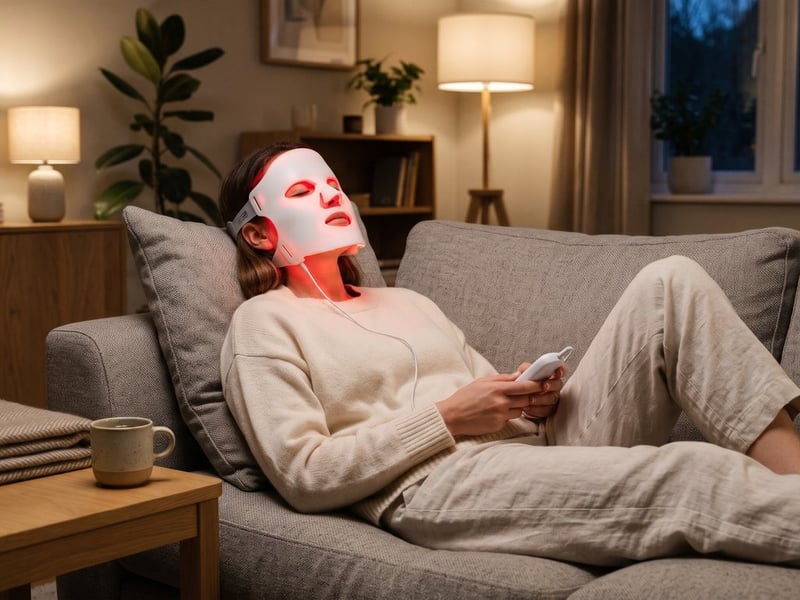
Matt's note
Protect your eyes during every session. Judge any change after 8 to 12 weeks.
Do LED face masks work?
Some trials suggest modest cosmetic changes, but the evidence is limited and mixed.
The Jagdeo systematic review assessed 31 randomised LED trials across dermatology. Rejuvenation evidence received grade C, meaning weak evidence, across 6 trials with 328 participants.
Samples were often below 20 people. Studies frequently lacked blinding or sham comparisons.
The review reported mild side effects, including dryness, redness and stinging. A promising result does not mean every home mask produces it.
Our mask has no trial of its own. We sell it as a cosmetic and wellness product, with no promise of wrinkle reduction.
Keep the buying question practical: would a relaxing routine still feel worthwhile if visible changes were slight?
Our honest ice bath evidence review takes the same approach: separate research findings from product expectations.
What does red and near-infrared light do to skin?
Red and near-infrared light have early evidence for fine lines and skin feel.
In Lee's 2007 trial, 76 people received 830nm, 633nm, both wavelengths, or sham light. Sessions took place twice weekly for 4 weeks, with 3 months of follow-up.
Wrinkles fell by up to 36%, and elasticity rose by up to 19%, compared with participants' starting measurements. These were clinic sessions, so the figures do not describe our home mask.
Consultant dermatologist Dr Anjali Mahto gives a more cautious view in Patient.info. Home masks deliver lower energy than clinic devices. She expects at most slight brightening and considers visible wrinkle reduction very unlikely on current evidence.
For blue light, the 2016 Cochrane review covered 71 trials and 4,211 people. Evidence remained inconclusive. Our mask is not sold to treat acne or any skin condition.
The table compares our mask's wavelengths with the available research evidence.
| Light | Wavelength on our mask | Commonly studied for | Strength of evidence |
|---|---|---|---|
| Red | 630nm | Fine lines and skin feel | Weak overall; some promising short trials. |
| Near-infrared | 850nm | Fine lines, often alongside red | Limited; combined results cannot establish its separate contribution. |
| Blue | 460nm | Acne research | Inconclusive. Our mask is not sold for acne treatment. |
| Yellow | 590nm | No supported purpose established | No reliable review evidence found. |
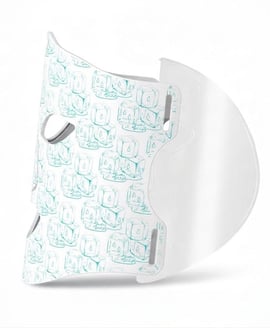
Matt's pick: the Red & Infrared LED Facial Mask
Best for: A home cosmetic routine with modest expectations.
Why we rate it: It has 630nm red and 850nm near-infrared light and 276 LEDs. It has a handheld controller and a cold insert. The flexible medical-grade liquid silicone body weighs about 190g, and free delivery is included.
£109
How long do LED face masks take to show results?
Expect subtle change at best after 8 to 12 weeks of regular use.
The home-mask trial in Park's 2025 study used double-blind, sham-controlled methods. It involved 60 adults across 2 sites.
Participants used 630nm red and 850nm infrared light for 9 minutes, 5 times weekly, over 12 weeks.
At 12 weeks, an independent rater recorded at least one grade of crow's feet improvement in 86.2% of mask users. For the sham group, that figure was 16.7%.
Users' own ratings showed no significant difference, but independent assessment differences became significant at 8 weeks, not 4.
A difference remained 4 weeks after stopping, but longer-lasting results are unknown. Funding came from the mask manufacturer.
Matching wavelengths alone does not establish that another mask will reproduce the results.
That study's schedule is evidence about its device. Follow your own mask's instructions for frequency and session length.
Are LED face masks safe for your eyes?
Eye injury is a documented risk, so eye precautions are necessary.
The Association of Optometrists reported Neutrogena's July 2019 mask recall, including the UK and Ireland. It concerned theoretical eye injury risks for people with certain eye conditions or medicines that increase eye sensitivity.
A 2020 case report described retinal damage in a 37-year-old mask user. She used blue, red and infrared light for 20 minutes every 2 days over a month.
The eye area was open and she kept her eyes open, but the authors advised keeping eyes closed and covered.
A case report cannot tell us how often harm occurs, but it gives reason to take eye protection seriously.
Ask your doctor before use if you have an eye condition or take medicines that increase light sensitivity.
Keep your eyes closed
Keep eyes closed and covered every session, even if the light feels gentle. Stop if you see after-images or have eye discomfort.
How do you use an LED face mask at home?
Follow the supplied manual; our mask runs sessions of about 10 minutes.
- Read the instructions before choosing a mode and output level.
- Use clean, dry skin as the safe default.
- Adjust the straps and follow eye protection instructions.
- Use the handheld controller to set the mode and level.
- Stop if irritation occurs.
Our mask has a 3000 mAh battery. A full charge gives roughly 2 hours of use. USB charging is UK compatible.
The box contains the mask, controller, USB cable, adjustable straps, cold compress insert and manual.
The mask does not heat up. The removable insert chills in the freezer and clips in after a session or for separate use.
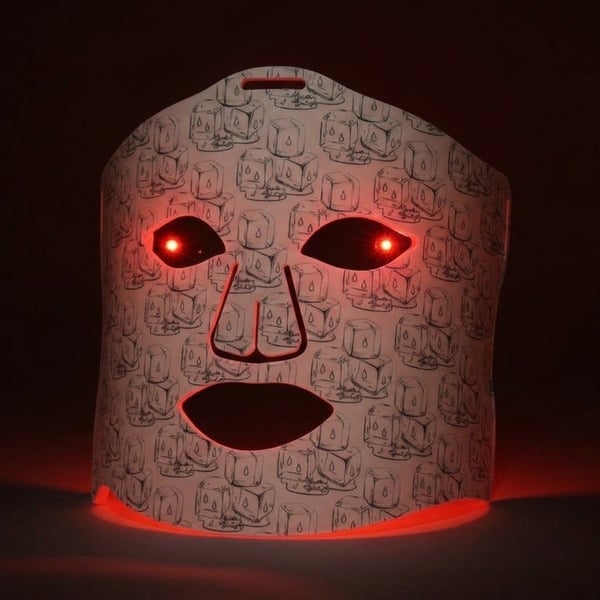
For separate heat and cold use around the eyes, we stock the Plus Eye Massager.
Our recovery range includes an Infrared Sauna Blanket. These are separate products, with separate instructions.
Our contrast therapy routine and beginner's guide to cold plunging cover those different routines.
Who should not use an LED face mask?
People with relevant eye conditions, light-sensitive medicines or photosensitive epilepsy should seek medical advice before use.
For isotretinoin, the NHS guidance lists sunbeds, sunlamps, lasers, chemical peels and microdermabrasion among things to avoid. LED masks are not named. Ask your prescriber before using one.
About 3% of people with epilepsy are photosensitive, according to the Epilepsy Society. Flashing at 3 to 30 flashes per second is the usual trigger. People with photosensitive epilepsy should ask their doctor first.
Reliable research on LED masks during pregnancy is lacking. Ask your midwife or GP; we cannot call mask use safe or unsafe.
See a GP or dermatologist for skin conditions. Stop using the mask if irritation occurs.
The Advertising Standards Authority ruled against 4 LED mask advertisers in November 2025 over medicinal claims. Such claims need MHRA medical device registration. Our mask is a cosmetic and wellness product, not a registered medical device.
"We stock this mask because it has flexible medical-grade silicone, weighs about 190g and has a removable cold insert. It has 276 LEDs with 630nm red and 850nm near-infrared light. Its 3000 mAh battery gives about 2 hours of use per charge."
- Matt W, Cold Plunge Store
Frequently asked questions
Can an LED mask get rid of wrinkles?
LED masks cannot promise to remove wrinkles. Some short trials suggest subtle improvement in fine lines. Our mask has no trial of its own.
How often should you use an LED face mask?
Follow your mask's instructions for frequency. The home trial used 5 sessions weekly for 12 weeks. That schedule does not establish instructions for our mask.
Can you use an LED mask every day?
Only if your mask's instructions allow daily use. Some reviewed studies used daily sessions. Follow the product instructions rather than increasing frequency yourself.
Is red light or blue light better?
Red has some fine-line evidence; blue-light evidence is inconclusive. They have been studied for different purposes. Our mask is not sold to treat acne or skin conditions.
Do LED face masks damage your eyes?
Eye damage has been documented in a mask case report. Keep eyes closed and covered, and stop for after-images or eye discomfort.
Can you use an LED mask with skincare products?
There is no strong evidence either way. Follow the product instructions and use clean, dry skin as the safe default.